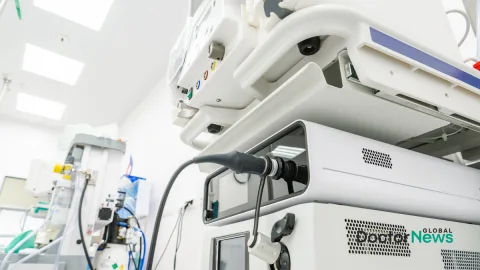
What Are Medical Devices? Types, Classes, Regulation
Medical devices explained: what counts as a device, risk classes, how FDA and EU MDR regulation works, software as a medical device, and post-market surveillance.

Software is a regulated medical device when it is intended for a medical purpose — triage, detection, quantification, decision support — regardless of whether it runs on dedicated hardware or a phone. Intended purpose is what places a product inside or outside regulation, which is why an app making a wellness claim and one making a diagnostic claim are treated so differently.
We follow this category closely because most clinical artificial intelligence arrives through it, and because frameworks for products that continue to learn after deployment are still being written.
Medical devices explained: what counts as a device, risk classes, how FDA and EU MDR regulation works, software as a medical device, and post-market surveillance.

Artificial intelligence in healthcare: where AI is used, what the evidence shows, regulation of AI medical devices, bias and safety risks, and governance requirements.
Digital health explained: telehealth, EHRs, mHealth, wearables, remote monitoring and health data — what the technologies do and what evidence supports them.
How AI supports medical diagnosis and clinical decision-making: imaging, pathology, ECG, risk prediction, validation requirements, and clinician oversight.
How healthcare regulation works: who regulates professionals, providers, medicines, devices and data, how rules are enforced, and why regulatory systems differ.
How medical device regulation works: risk classification, FDA pathways, EU MDR and notified bodies, clinical evidence, software rules and post-market surveillance.