Technology is changing hospitals in two distinct ways. It is changing what clinicians can do — new imaging, new surgical techniques, new therapies — and it is changing how services are organised, by moving care out of buildings, automating routine work, and making information available where decisions are made.
The second category is where most of the practical impact now sits, and it is also where implementation succeeds or fails. Technology rarely transforms a service by itself; it does so when a service is redesigned around what the technology makes possible. Systems that install tools without redesigning workflow typically report cost, disruption, and limited benefit.
Information Systems as Infrastructure
The electronic health record is the foundation on which most other digital capability rests. It provides a shared, legible, accessible record; supports electronic prescribing with allergy and interaction checking; enables results reporting and order communication; and generates structured data for audit, quality measurement, and research.
The costs are equally well documented: substantial documentation burden, alert fatigue where warnings are excessive or poorly targeted, and workflow disruption during and after implementation. These effects are consistently reported, and the difference between systems where records help and systems where they hinder is largely a matter of configuration, clinical involvement in design, and willingness to remove low-value alerts and mandatory fields.
Interoperability determines whether records are useful beyond their own institution. Without standards-based exchange, digitisation produces isolated systems that reproduce the fragmentation of paper records in a less portable form.
Moving Care Out of the Hospital
The most consequential structural change is the relocation of care that once required admission.
- Ambulatory and same-day emergency care assesses and treats patients within a day, avoiding admission for conditions that previously required a bed.
- Day surgery has expanded to include procedures that formerly needed inpatient stays, supported by improved anaesthetic and analgesic techniques and by minimally invasive surgery.
- Virtual wards and hospital-at-home deliver acute-level care in a patient's home, supported by remote monitoring, scheduled visits, and a responsible clinical team. Implementation has expanded in several health systems for selected conditions and patients.
- Remote monitoring supports chronic disease management and post-acute follow-up, with benefit depending on the clinical response pathway rather than on the sensing technology.
- Telehealth substitutes for in-person consultation where physical examination is not required, extending specialist reach to remote and under-served locations.
These models shift where care happens, and with it the workforce, equipment, and governance requirements. A virtual ward is a clinical service with staffing, escalation, and accountability requirements, not a monitoring platform.
Automation of Routine Work
Automation has produced some of the clearest measurable benefits, largely outside direct clinical care.
- Laboratory automation. Track-based systems handle sample sorting, aliquoting, analysis, and archiving, increasing throughput and reducing manual handling errors. This is among the most mature and best-evidenced applications of automation in healthcare.
- Pharmacy automation. Robotic dispensing, automated cabinets, and barcode-assisted medication administration reduce dispensing and administration errors and free pharmacist time for clinical work.
- Logistics. Automated guided vehicles and pneumatic tube systems move samples, medicines, linen, and waste, reducing portering demand.
- Administrative automation. Scheduling, registration, coding support, and correspondence generation reduce clerical load, with ambient documentation tools now addressing note-writing directly.
Clinical Technologies
Imaging and Diagnostics
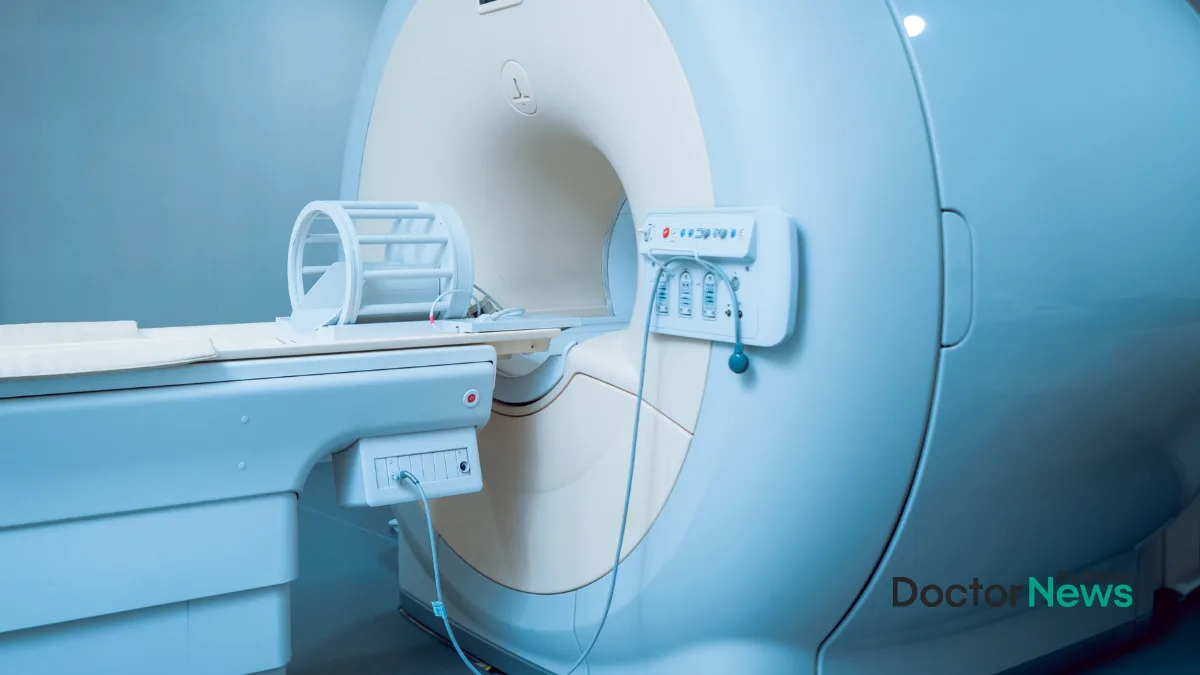
Faster acquisition, improved reconstruction permitting lower radiation dose, hybrid modalities combining functional and anatomical information, and point-of-care ultrasound available at the bedside have all changed diagnostic pathways. Digital pathology enables remote reporting and algorithmic assistance, though it requires scanning infrastructure many laboratories lack.
Minimally Invasive and Robotic Surgery
Laparoscopic and endoscopic techniques have reduced the invasiveness of many operations, shortening stays and recovery. Robotic assistance extends this in confined anatomical spaces, with benefits over open surgery clearer than benefits over skilled conventional laparoscopy, and with substantial capital and consumable costs.
Monitoring and Critical Care
Continuous monitoring, automated early warning scores calculated from recorded observations, and closed-loop systems in defined applications such as insulin delivery. Automated deterioration detection is only as useful as the response it triggers.
Artificial Intelligence
Deployed applications concentrate in imaging triage and quantification, documentation, risk prediction, and operational forecasting. Evidence of patient benefit is strongest where a tool reorders workflow to shorten time to treatment, and weakest where models predict without a defined effective action attached.
Operational and System Technologies
- Capacity and flow management systems providing real-time visibility of beds, theatre lists, and discharge status.
- Demand forecasting supporting staffing and capacity planning across seasonal variation.
- Digital rostering matching staffing to predicted demand and managing rota compliance.
- Supply chain systems tracking consumables and implants, supported by unique device identification.
- Asset tracking locating equipment, which is a persistent and underestimated source of lost clinical time.
Why Technology Projects Fail
Implementation research identifies a consistent set of causes, few of them technical:
- Workflow misfit. The system requires steps that do not match how work is actually done, so staff develop workarounds that undermine the intended benefit and often the safety case.
- Insufficient clinical involvement. Systems specified without the people who will use them fail at contact with practice.
- Inadequate training and support, particularly after the initial go-live period when problems surface.
- Poor integration. Separate logins, duplicate data entry, and information that does not flow into the record.
- Benefits assumed rather than measured. Without baseline measurement, neither improvement nor deterioration can be demonstrated.
- Underestimating the transition. Productivity typically falls during implementation, and plans that assume otherwise create pressure that damages both the project and staff.
- Solving a problem nobody had. Technology procured for its capability rather than for a defined operational or clinical need.
Evaluation, Safety, and Resilience
Health technology assessment evaluates whether a technology delivers benefit worth its cost relative to current practice, and increasingly covers digital as well as clinical technologies. Clinical risk management standards for health IT require hazard assessment and mitigation for systems affecting patient care, recognising that software failures and design flaws can cause harm.
Resilience has become a first-order concern. As clinical services depend on digital systems, outages and cyber incidents translate directly into cancelled operations, diverted ambulances, and reversion to paper processes that many staff have never used. Business continuity planning, tested downtime procedures, backup, and network segmentation are patient safety measures, not solely IT governance.
Equity Considerations
Technology-enabled service change can widen inequity. Remote and digital-first models advantage those with connectivity, devices, digital skills, and language access, who are frequently not those with the greatest health need. Maintaining non-digital access routes, providing devices and connectivity where required, and monitoring uptake by demographic group are practical requirements rather than optional additions.
Sources
- World Health Organization — digital health guidance; health technology assessment resources
- Organisation for Economic Co-operation and Development — health technology and digital transformation analysis
- European Observatory on Health Systems and Policies — health technology and service delivery reviews
- National health technology assessment bodies — appraisals of digital and clinical technologies
- National health IT safety standards — clinical risk management for health software