A hospital is an organisation that concentrates clinical expertise, diagnostic capability, and treatment infrastructure in one place so that people with acute or complex conditions can be assessed and treated continuously. Its defining characteristic is not the buildings but the combination of round-the-clock staffing, immediate access to diagnostics, and the ability to escalate care rapidly when a patient deteriorates.
Understanding how a hospital functions means understanding it as a system of flows — patients, information, staff, medicines, and equipment moving through interdependent departments — rather than as a collection of separate specialties.
Types of Hospital
- District or community hospitals provide general medical, surgical, maternity, and emergency services for a local population.
- Teaching hospitals combine clinical service with education and research, usually affiliated with a university, and typically offer a broader range of specialties.
- Specialist hospitals concentrate on a defined field such as cancer, cardiac disease, paediatrics, ophthalmology, or psychiatry.
- Tertiary and quaternary referral centres provide highly specialised services for a wide catchment, often including transplantation, complex neurosurgery, and major trauma.
- Rehabilitation and long-term care facilities support recovery and ongoing care after acute treatment.
Ownership varies independently of function: hospitals may be publicly owned, private not-for-profit, or private for-profit, and in many systems all three operate alongside one another.
Clinical Departments
Emergency Department
The unscheduled entry point, operating continuously. Arriving patients are triaged according to clinical urgency rather than order of arrival, then assessed, investigated, and either treated and discharged, referred to a specialty for admission, or transferred. Emergency departments also serve as the interface with pre-hospital services, receiving ambulance arrivals and activating trauma, stroke, and cardiac pathways that mobilise multiple teams simultaneously.
Inpatient Wards
Wards are organised by specialty — general medicine, surgery, cardiology, respiratory, oncology, orthopaedics, neurology, paediatrics, obstetrics — and staffed by nursing teams with medical teams conducting daily rounds. Ward-level activity includes assessment, medication administration, monitoring, procedures, therapy input, and discharge planning, which should begin at admission rather than at the end of a stay.
Critical Care
Intensive care units provide organ support — mechanical ventilation, vasoactive drugs, renal replacement therapy — with continuous monitoring and very high staff-to-patient ratios. High dependency or intermediate care units provide an intermediate level. Critical care is among the most resource-intensive services in any hospital, and its capacity acts as a systemic constraint: without an available critical care bed, major elective surgery is typically postponed.
Operating Theatres and Perioperative Services
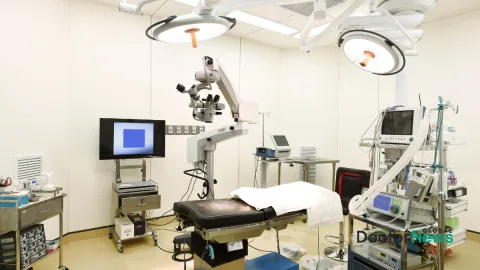
Surgical care spans preoperative assessment, the intraoperative period, and postoperative recovery. Theatre operation requires surgeons, anaesthetists, operating department practitioners, scrub and circulating nurses, recovery staff, sterile services, and equipment and implant availability, all coordinated to a schedule. Because theatre time is expensive and scarce, scheduling, list utilisation, and cancellation rates are closely managed. Elective and emergency surgery compete for the same resources, which is why emergency pressure frequently displaces planned operations.
Maternity Services
Antenatal care, labour and delivery, obstetric theatres, and postnatal care, with neonatal units providing care for preterm or unwell newborns at varying levels of intensity.
Outpatient and Ambulatory Care
Scheduled specialist consultation, diagnostic clinics, day surgery, endoscopy, dialysis, chemotherapy day units, and increasingly ambulatory emergency care designed to assess and treat patients within a day rather than admitting them. Shifting activity from inpatient to ambulatory settings has been a sustained direction of travel in most health systems.
Mental Health Services
Inpatient psychiatric wards, liaison psychiatry supporting patients in general wards and the emergency department, and crisis services. In many systems mental health services are organised and funded separately from acute services, which complicates care for patients with both physical and mental health needs.
Diagnostic Services
- Radiology and medical imaging — plain radiography, CT, MRI, ultrasound, and nuclear medicine, together with interventional radiology performing image-guided procedures.
- Laboratory medicine — clinical chemistry, haematology, microbiology, immunology, and transfusion services, operating continuously with defined turnaround times.
- Pathology — histopathology and cytology providing tissue diagnosis, which is definitive for most cancers and determines treatment pathways.
- Physiological measurement — cardiology investigations, respiratory function, neurophysiology, and endoscopy.
Diagnostic turnaround time is a primary determinant of length of stay. A patient waiting for a scan or a result occupies a bed without receiving treatment, which is why diagnostic capacity and access at weekends are recurrent operational priorities.
Clinical Support Services
- Pharmacy — dispensing, clinical pharmacy input on wards, medicines reconciliation, aseptic preparation, and stewardship programmes for antimicrobials.
- Therapies — physiotherapy, occupational therapy, speech and language therapy, and dietetics, central to rehabilitation and safe discharge.
- Infection prevention and control — surveillance, isolation management, hand hygiene programmes, and outbreak response.
- Sterile services — decontamination and sterilisation of instruments, a prerequisite for surgical activity.
- Transfusion and blood bank — supply and cross-matching of blood products.
- Palliative care — symptom management and end-of-life care across the hospital.
Non-Clinical Operations
Hospitals depend on functions that patients rarely see: estates and facilities management maintaining buildings, ventilation, medical gases, and power resilience; portering and logistics moving patients, samples, and supplies; catering and cleaning, the latter directly relevant to infection control; medical engineering maintaining and calibrating equipment; procurement and supply chain; health informatics and IT; finance and coding; and human resources managing recruitment, rostering, and training. A failure in any of these can halt clinical activity as effectively as a clinical failure.
Patient Flow
Flow describes movement through the hospital, and it is where operational performance is decided.
The typical emergency pathway runs from arrival and triage, through assessment and investigation, to a decision to admit or discharge, then to a bed, treatment, and discharge. The elective pathway runs from referral through outpatient assessment, listing, preoperative preparation, admission, procedure, recovery, and discharge.
Congestion propagates backwards. When inpatient beds are unavailable, admitted patients remain in the emergency department, which reduces its capacity to assess new arrivals, which delays ambulance handover, which removes ambulances from the community. Emergency department crowding is therefore usually a symptom of inpatient capacity and discharge constraints rather than of excessive attendance.
Discharge is the most common constraint. Delays arise from waiting for medicines, transport, therapy assessment, equipment for the home, care package availability, or a residential placement. Many of these depend on community and social care services outside hospital control, which is why discharge performance is a system issue rather than a hospital one. Techniques used to manage flow include early discharge planning with an expected date of discharge, criteria-led discharge, discharge lounges, board rounds, and demand and capacity modelling for seasonal variation.
Governance, Quality, and Safety
Hospital governance typically comprises a board with overall accountability, an executive team including medical, nursing, and operational directors, and clinical divisions led by clinicians with management responsibility. Clinical governance covers the systems through which a hospital assures and improves care quality.
Core safety mechanisms include incident reporting and investigation focused on system factors rather than individual blame; mortality and morbidity review; clinical audit against agreed standards; surgical safety checklists; early warning scores that trigger escalation when a patient's observations deteriorate; medication safety systems; infection surveillance; and external accreditation and inspection. Patient experience feedback and complaints handling provide a further source of intelligence, and many hospitals publish performance indicators publicly.
Pressures on Hospitals
- Workforce. Recruitment, retention, and burnout, with staffing levels the binding constraint on capacity in most systems.
- Bed availability. Occupancy sustained at very high levels reduces the ability to absorb variation and is associated with worse flow and infection risk.
- Emergency and elective competition. Emergency demand displaces planned activity, generating backlogs.
- Ageing and complexity. More patients with multiple long-term conditions and frailty, requiring longer stays and more coordination.
- Financial constraint. Cost growth in staffing, medicines, and technology against constrained budgets.
- Resilience. Preparedness for outbreaks, extreme weather, supply disruption, and cyber incidents, which can disable clinical systems entirely.
Sources
- World Health Organization — hospital service delivery; Surgical Safety Checklist; infection prevention and control guidance
- Organisation for Economic Co-operation and Development — hospital capacity and health system performance analysis
- European Observatory on Health Systems and Policies — hospital organisation and reform reviews
- National healthcare inspection and accreditation bodies — standards for hospital quality and safety