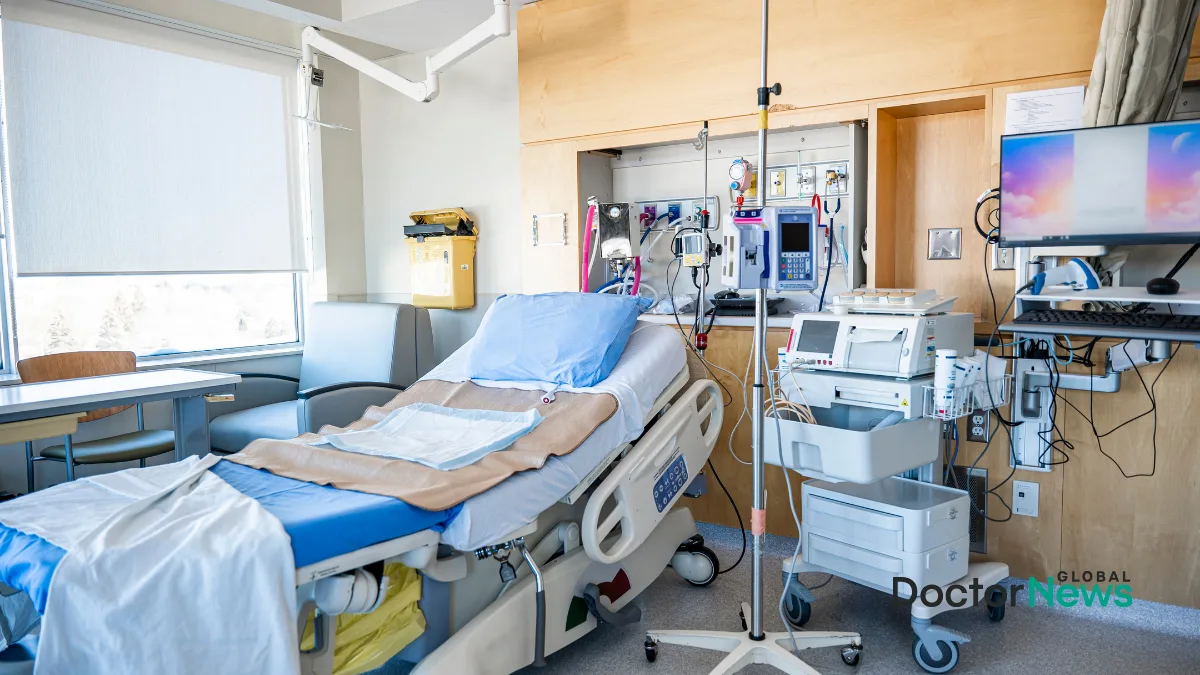
Medical device innovation is the process of turning an unmet clinical need into a device that is safe, effective, manufacturable, regulated, purchasable, and actually used. Each of those conditions is a separate hurdle, and devices fail at every one of them. A technically excellent prototype that no clinician can integrate into a workflow, that no health system will fund, or that cannot be manufactured to a reproducible specification does not become a product.
Device innovation differs from pharmaceutical development in rhythm as well as method. Devices iterate continuously, often improving through successive versions after launch, and the user — clinician, nurse, technician, or patient — is part of the system, so human factors are central rather than peripheral.
Stage 1: Identifying and Validating the Need
Structured needs-finding methods, developed in biodesign programmes and now widely taught, begin with clinical observation rather than invention. Developers spend time in the care environment, document problems, and characterise them precisely: who is affected, how often, what current practice is, what the consequences of the problem are, and what an acceptable solution would need to achieve.
Needs are then screened and prioritised against the size and severity of the problem, the strength of existing alternatives, the plausibility of a technical solution, the regulatory burden, and whether a viable route to payment exists. Devices that solve a genuine problem for which no one is willing to pay do not reach patients, so the economic question belongs at the start rather than the end.
Stage 2: Concept and Prototyping
Concept generation produces multiple candidate approaches; early prototypes exist to answer questions rather than to impress. Common practice progresses through:
- Proof-of-principle models testing whether the core mechanism works at all.
- Looks-like and works-like prototypes, often separate, addressing form and function independently.
- Bench models and simulated-use testing in anatomical models or simulators.
- Preclinical testing in cadaveric or animal models where the device interacts with tissue.
Early clinician involvement is essential and is one of the strongest predictors of eventual usability. Prototyping technologies including additive manufacturing have shortened these cycles considerably, but the discipline remains the same: identify the riskiest assumption and build the cheapest thing that tests it.
Stage 3: Design Controls and the Quality System
Once development moves towards a product, it comes under a formal quality management system, typically conforming to ISO 13485 and to jurisdictional requirements such as the FDA's quality system regulation.
Design controls create a documented chain of reasoning:
- User needs — what the device must do for whom.
- Design inputs — those needs expressed as specific, testable requirements.
- Design outputs — drawings, specifications, software, and manufacturing instructions.
- Design verification — evidence that outputs meet inputs: does the device meet its specification?
- Design validation — evidence that the device meets user needs in the intended environment: does it solve the problem?
- Design transfer — translation of the design into a reproducible manufacturing process.
- Design history file — the complete record demonstrating the process was followed.
The distinction between verification and validation is frequently misunderstood and matters greatly. A device can pass every specification test and still fail to solve the clinical problem.
Stage 4: Risk Management
Risk management for medical devices follows ISO 14971 and runs continuously through the lifecycle. Developers identify hazards, estimate and evaluate associated risks, implement control measures in order of priority — inherently safe design first, then protective measures, then information for safety such as labelling and warnings — and verify that controls are effective and have not introduced new hazards.
Residual risk is assessed against clinical benefit, and the risk file is updated as post-market information accumulates. Because information for safety is the weakest form of control, relying on a warning where a design change is feasible is generally not accepted.
Stage 5: Usability and Human Factors
Use error is a well-documented contributor to device-related harm, and regulators require human factors engineering proportionate to risk. This involves analysing the use environment and user groups, identifying tasks where error would be hazardous, designing to make those errors difficult, and conducting formative testing during development followed by summative validation testing with representative users under realistic conditions.
Realistic conditions matter: a device used in a quiet laboratory by its designers behaves differently from one used at night, under time pressure, by a rotating team, with alarms sounding. Devices intended for use by patients or carers at home require particular attention, since users may have impaired vision, dexterity, or cognition and receive no formal training.
Stage 6: Clinical Evaluation
Clinical evaluation assembles the evidence that the device performs as intended and that its benefits outweigh its risks. Depending on class, novelty, and jurisdiction, it may draw on bench and simulated-use data, published literature on equivalent technologies, and clinical investigations conducted specifically for the device.
Device trials pose distinctive methodological problems. Blinding is often impossible, sham controls raise ethical questions, outcomes depend on operator learning curves, and the device may be modified during the study period. Designs must accommodate this — through staged evaluation frameworks developed for surgical and device innovation, registry-based follow-up, and careful specification of when in the technology's development a comparative trial is appropriate.
Planning must anticipate two audiences. Regulators ask whether the device is safe and performs as claimed. Payers and health technology assessment bodies ask whether it delivers benefit worth the cost relative to current practice, often requiring comparative and economic outcomes that regulatory submissions do not. Collecting only the former commonly results in an approved device that no one will fund.
Stage 7: Regulatory Approval
The regulatory route follows the device's risk classification. In the United States, options include exemption for many low-risk devices, premarket notification through the 510(k) pathway by demonstrating substantial equivalence to a predicate, the De Novo route for novel low-to-moderate risk devices without a predicate, and premarket approval for the highest-risk devices supported by clinical evidence.
In the European Union, manufacturers demonstrate conformity with the Medical Device Regulation's general safety and performance requirements. For all but the lowest-risk class, an independent notified body assesses technical documentation and the quality management system, after which the device may carry CE marking.
Software components introduce additional standards covering software lifecycle processes, cybersecurity, and, for machine-learning-enabled functions, expectations regarding training data, performance characterisation, and management of post-deployment changes.
Stage 8: Manufacturing and Scale-Up
Design transfer converts a validated design into a manufacturing process capable of producing the device consistently. This involves supplier qualification, process validation, sterilisation validation where required, packaging and shelf-life testing, and establishment of production controls. Manufacturing facilities are subject to inspection and audit. Devices with electronic and software components add configuration management and traceability requirements, and unique device identification supports traceability and recall management downstream.
Stage 9: Adoption, Reimbursement, and Real-World Use
Market entry is not adoption. Several further conditions must be met:
- Reimbursement. A funding mechanism must exist — an appropriate procedure or product code, a coverage decision, and a price. Novel devices sometimes fall outside existing categories, requiring new codes or specific funding arrangements.
- Procurement. Hospitals assess devices through committees weighing clinical evidence, cost, compatibility with existing equipment, servicing, and training requirements.
- Workflow integration. A device that requires additional staff, extra steps, or incompatible data formats faces resistance regardless of its performance.
- Training and support. Sustained use depends on training, technical support, consumable supply, and maintenance.
- Post-market surveillance. Manufacturers must collect and analyse performance data in use, report serious incidents, and update risk and clinical evaluation documentation accordingly.
Device innovation is iterative after launch as well as before it. Post-market data drive design improvements, and significant changes may require new regulatory submissions.
Why Device Innovation Fails
- The need was assumed rather than validated.
- The device solved a clinical problem but not an economic one, leaving no route to payment.
- Usability was addressed too late to change the design.
- Clinical evidence was planned for regulators but not for payers.
- The design could not be manufactured reproducibly at acceptable cost.
- The device required workflow change that adopting institutions would not make.
Sources
- U.S. Food and Drug Administration — design control guidance; human factors and usability engineering guidance; premarket pathways
- European Union Medical Device Regulation — general safety and performance requirements; clinical evaluation
- ISO 13485 — quality management systems for medical devices
- ISO 14971 — application of risk management to medical devices
- IEC 62304 — medical device software lifecycle processes
- IEC 62366 — application of usability engineering to medical devices
- World Health Organization — health technology assessment and medical device guidance